

Unlike the very specific hazard pictograms, such as for example the flame symbol, the meaning of the exclamation mark in GHS CLP is of a more general nature. In short:… Continue reading What is the meaning of the exclamation mark GHS CLP?
Category: SDS Authoring
Typical national regulations for safety data sheets in Germany

When preparing safety data sheets, not only the language has to be localised, but also relevant national regulations for safety data sheets have to be addressed. The REACH Regulation, Annex… Continue reading Typical national regulations for safety data sheets in Germany
What is the meaning of “Aspiration hazard” in GHS CLP?

Aspiration is the entry of solids or liquids into the trachea and the lower airways. But what does this mean in terms of aspiration hazards within the context of the… Continue reading What is the meaning of “Aspiration hazard” in GHS CLP?
The link between “damaging to eyes” and “skin corrosive” in the EU law on hazardous substances

Regulation (EC) No. 1272/2008 (CLP), the law on hazardous substances at European level for the classification, labelling and packaging of substances and mixtures, distinguishes between harmful effects on the eye… Continue reading The link between “damaging to eyes” and “skin corrosive” in the EU law on hazardous substances
What is log Pow? The O/W partition coefficient in SDSs

In Section 12 of the safety data sheets, you can frequently encounter phrases such as “log Kow”, “log Pow” or “log pOW” in connection with the bioaccumulation potential. What is… Continue reading What is log Pow? The O/W partition coefficient in SDSs
Storage class 10-13, is it worthwhile to be specific?

According to the Technical Rules for Hazardous Substances 510 – Storage of hazardous substances in non-stationary containers – it is possible to indicate storage class 10-13. But is it worthwhile… Continue reading Storage class 10-13, is it worthwhile to be specific?
Retention period for safety data sheets

Retention of documents is an important topic, especially in terms of the law on hazardous substances. The REACH Regulation regulates the disclosure of information, also through the use of safety… Continue reading Retention period for safety data sheets
Penetration and wearing time for protective gloves

Penetration time and wearing time are generally not the same. What is the difference and what is the maximum length of time protective gloves should be worn? Penetration time Section… Continue reading Penetration and wearing time for protective gloves
Dust limit values, the difference between “E” and “A” dust fractions

In occupational health and safety and when working with hazardous substances, terms like smoke, dust, “E” dust or “A” dust are often mentioned. These terms are clearly defined in the… Continue reading Dust limit values, the difference between “E” and “A” dust fractions
When is a safety data sheet up-to-date?
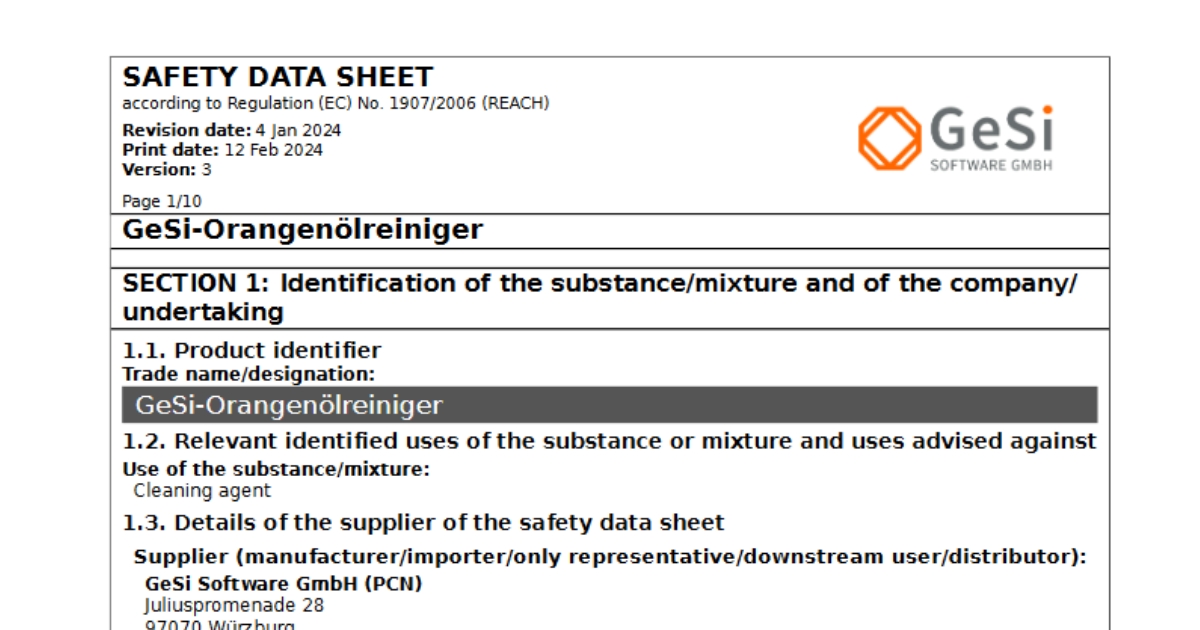
The use and format of safety data sheets (SDS) is specified in the REACH Regulation. It is important to know if a safety data sheet is required and how often… Continue reading When is a safety data sheet up-to-date?